Are you ready to unlock the secrets of effective glute training? Understanding how hip thrusts and squats impact your strength can revolutionize your workout routine and help you achieve your fitness goals!
What You Will Learn
Hip thrusts activate the gluteus maximus up to three times more than traditional squats.
Squats engage multiple muscle groups, including the quadriceps and hamstrings, providing comprehensive lower body strength.
Combining hip thrusts and squats can yield superior hypertrophy benefits by targeting muscles from different angles.
Proper biomechanics and range of motion are crucial for maximizing glute activation during both exercises.
A balanced workout that includes both exercises can help reduce injury risks by distributing training loads effectively.
Comparing Hip Thrusts vs. Squats for Glute Development
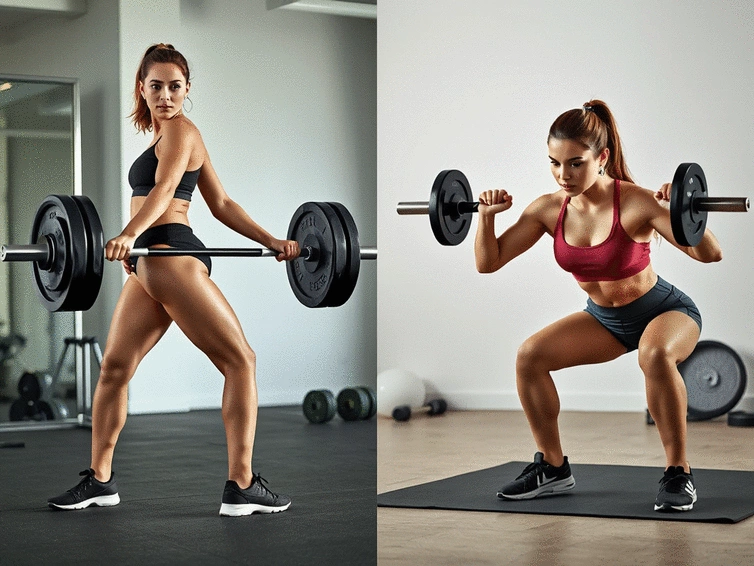
This visual highlights the key differences and benefits of hip thrusts and squats, two powerful exercises for glute strength and hypertrophy.
Hip Thrusts: Targeted Glute Activation
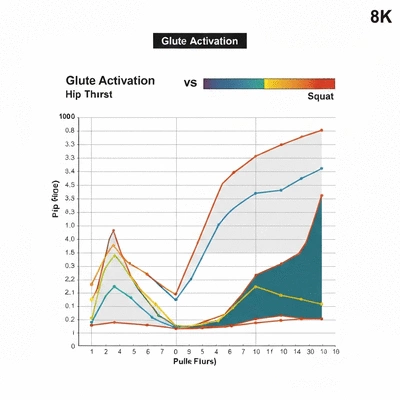
Primary Focus: Gluteus Maximus. Studies show up to 3x more glute activation compared to squats.
Biomechanics: Primarily hip extension.
Range of Motion: Greater ROM at hips for glute recruitment.
Excellent for Glute Hypertrophy
Squats: Comprehensive Lower Body Engagement
Primary Focus: Glutes, Quadriceps, Hamstrings.
Biomechanics: Knee flexion and hip extension.
Range of Motion: Excellent quadriceps activation, limits hip extension.
Great for Overall Leg Development
Why Combine Both? Synergistic Benefits
✓ Enhanced Hypertrophy
Varied stimulus for better muscle growth.
✓ Improved Strength & Power
Greater overall gains in athletic performance.
✓ Reduced Injury Risk
Distributes training load across muscle groups.
✓ Comprehensive Development
Targets glutes from different angles effectively.
Understanding the Effectiveness of Hip Thrusts vs. Squats for Glute Strength
When it comes to strengthening your glutes, two exercises often come up: hip thrusts and squats. Both are effective but target your muscles in different ways. Recent research highlights that hip thrusts tend to activate the glutes more directly, while squats engage multiple muscle groups, including the quadriceps and hamstrings. Understanding these differences can help you tailor your workouts to achieve your specific goals in glute strength training!
For anyone looking to enhance their glute development, knowing how each exercise impacts muscle activation and growth is crucial. As a dedicated fitness enthusiast and trainer, I’ve seen firsthand how these movements can transform glute strength. Let’s dive deeper into what the evidence says about these two powerhouse exercises!
What the Evidence Reveals About Glute Activation and Hypertrophy
Comparative Analysis of EMG Studies
Electromyography (EMG) studies provide insights into how effectively each exercise engages the glute muscles. Research shows that hip thrusts typically produce higher glute activation compared to squats. In fact, several studies indicate that during hip thrusts, the glutes can be activated up to three times more than during traditional squats. This is particularly beneficial for those focused on building strength and muscle size in the gluteal region. For more detailed insights into glute activation, you can explore studies like those published on PubMed, which often compare muscle activity during various exercises.
Hip thrusts activate the gluteus maximus more intensely.
Squats engage the quadriceps and hamstrings alongside the glutes.
EMG studies suggest a stronger focus on glute activation in hip thrusts.
Understanding these differences can help you decide how to incorporate these exercises into your routine effectively. If your main goal is to target and activate your glutes, hip thrusts may be the way to go!
Hypertrophy Outcomes: Similarities and Differences
Looking at hypertrophy, or muscle growth, recent randomized controlled trials have explored the effects of both hip thrusts and squats. While both exercises result in positive hypertrophy outcomes, the degree of growth in glute size can vary. Some studies suggest that individuals who include both exercises in their routines may experience better overall results because they target the muscle from different angles. For instance, a recent study available on NCBI highlights the benefits of combining these movements for superior muscle growth. You can also find ongoing clinical trials registered at ClinicalTrials.gov that further investigate the efficacy of these exercises.
Hip thrusts focus on the gluteal muscles, promoting significant growth.
Squats provide comprehensive lower body engagement, aiding overall leg development.
Combining both exercises can yield superior hypertrophy benefits.
Incorporating a mix of these exercises into your workouts can help you achieve balanced glute development and overall strength.
Biomechanics of Hip Thrusts and Squats: How Each Movement Works
The Mechanics Behind Hip Extension and Knee Flexion
Understanding the biomechanics of hip thrusts and squats is essential for maximizing glute activation. Hip thrusts primarily involve hip extension, where the glutes are the main muscle group engaged to lift your hips. In contrast, squats involve knee flexion, requiring your quadriceps and hamstrings to assist in the movement. This fundamental difference influences how each exercise targets your muscles.
By focusing on these mechanics, you can better appreciate how they contribute to your fitness journey. Want to feel the burn in your glutes? Incorporating hip thrusts into your routine is a great way to do just that!
Range of Motion and Muscle Length-Tension Relationships
The range of motion (ROM) plays a significant role in how effectively each lift engages the glutes. Hip thrusts allow for a greater ROM at the hips, promoting longer muscle lengths and better glute recruitment. Conversely, squats can limit hip extension but provide excellent activation of the quadriceps.
Hip thrusts enhance glute engagement through full hip extension.
Squats allow for effective knee and hip joint engagement.
Both movements should be performed with proper form to maximize effectiveness.
Prioritizing an adequate range of motion in both lifts can help you achieve optimal muscle activation and strength gains!
Interactive Poll: Your Preference!
Which exercise do you find more effective for glute training? Share your thoughts below:
Frequently Asked Questions (FAQs)
A1: Hip thrusts are generally found to activate the gluteus maximus more directly and intensely, with some studies showing up to three times more glute activation compared to traditional squats.
A2: Yes, squats engage multiple muscle groups, including the glutes, quadriceps, and hamstrings, providing comprehensive lower body strength and contributing to overall glute development.
A3: Absolutely. Combining both exercises offers synergistic benefits, leading to enhanced hypertrophy, improved strength and power, reduced injury risk by distributing the training load, and comprehensive development by targeting glutes from different angles.
A4: Hip thrusts primarily involve hip extension, directly engaging the glutes. Squats, on the other hand, involve knee flexion and hip extension, engaging quadriceps and hamstrings more significantly alongside the glutes.
A5: Hip thrusts allow for a greater range of motion at the hips, promoting longer muscle lengths and better glute recruitment. Squats offer excellent quadriceps activation but can limit hip extension. Proper ROM in both is crucial for optimal muscle activation and gains.
Summarizing the Benefits of Combining Hip Thrusts and Squats
As we explored the effectiveness of hip thrusts and squats, it’s clear that incorporating both exercises can be incredibly beneficial for your glute strength training. Each movement brings unique advantages that, when combined, can enhance your overall performance and results. Here’s a quick recap of why you should consider adding both to your routine!
Targeted Muscle Activation: Hip thrusts primarily engage the glutes, while squats engage multiple muscle groups including the quadriceps and hamstrings.
Improved Strength and Power: Using both lifts can lead to greater overall strength gains, benefiting your athletic performance.
Reduced Injury Risk: A balanced workout that includes both exercises can help prevent overuse injuries by distributing the training load across different muscle groups.
Enhanced Hypertrophy: Combining these lifts may promote better muscle growth through varied stimulus, optimizing your glute development.
By alternating between hip thrusts and squats, you can leverage their unique strengths, ensuring a well-rounded approach to your glute training. This is especially important for those of us at Exercises for Butt who are committed to achieving our fitness goals effectively and safely!
Taking Action: Your Path to Stronger Glutes
Now that you have a clear understanding of the benefits of combining hip thrusts and squats, it's time to take action! Implement the programming templates we discussed earlier, paying close attention to your individual goals and fitness level. Remember, consistency is key!
Start Simple: If you're new, begin with basic sets and reps of each exercise, focusing on form.
Gradually Increase Intensity: As you gain confidence, challenge yourself by increasing weight or adjusting your rep schemes.
Track Your Progress: Keep a journal of your workouts to monitor improvements and stay motivated.
Don't forget to share your progress or ask any questions in the comments below! At Exercises for Butt, we're here to support you on your journey to stronger, more toned glutes. Let’s lift those glutes and elevate your fitness journey together!
Recap of Key Points
Here is a quick recap of the important points discussed in the article:
Hip Thrusts vs. Squats: Hip thrusts activate the glutes more directly, while squats engage multiple muscle groups.
EMG Studies: Hip thrusts can activate glutes up to three times more than squats, making them effective for targeted strength training.
Hypertrophy Benefits: Combining both exercises can lead to better overall muscle growth and strength gains.
Biomechanics: Hip thrusts focus on hip extension, while squats require knee flexion, affecting muscle engagement.
Training Strategy: For balanced glute development, alternate between hip thrusts and squats for optimal results.
At Exercises for Butt, our mission is to inspire and empower individuals to elevate their fitness journey through effective glute training. We are committed to providing accessible, safe, and innovative workout strategies that promote strength, confidence, and a positive body image for everyone.




Buying Guide for Glute Fitness Gear
Understanding Glute Activation Science
Glute Training Frequency and Tips
Fix Common Glute Training Mistakes
Selecting Glute Activation Exercises Wisely