Are you maximizing your glute workout potential? Understanding the nuances between glute bridges and hip thrusts can elevate your fitness journey significantly. Each exercise serves distinct purposes, and knowing which to incorporate can lead to better results!
What You Will Learn
Glute bridges are ideal for beginners and focus on form, making them a safe starting point.
Hip thrusts allow for greater strength training due to increased range of motion and loading capacity.
Proper exercise technique is essential for effective glute activation and injury prevention in both exercises.
Consider your fitness goals: glute bridges for foundational strength, hip thrusts for muscle growth.
Availability of equipment can influence your choice—glute bridges require minimal gear while hip thrusts often need a bench.
Listening to your body and adapting exercises can enhance engagement and prevent injuries during workouts.
Glute Bridges vs. Hip Thrusts: A Comparative Overview
Understanding the differences between glute bridges and hip thrusts is key to optimizing your glute-building workouts. This comparison highlights their core characteristics and suitability for various fitness levels and goals.
Exercise Comparison: Key Differences
Glute Bridges
Floor-based exercise
Lower range of motion
Easier for beginners
Minimal equipment needed
Focus on glute activation & core stability
Hip Thrusts
Bench/elevated surface
Greater range of motion
Suitable for intermediate/advanced
Requires bench & weights
Maximal strength & muscle growth
Glute Bridges: Benefits & Ideal Users
•Excellent for beginners and injury recovery.
•Improves posture and core stability.
•Can be performed anywhere with no equipment.
•Gentle and safe starting point for glute engagement.
Hip Thrusts: Benefits & Ideal Users
•Maximizes strength and muscle growth (hypertrophy).
•Allows for greater weight loading and progressive overload.
•Best for advanced lifters focusing on glute development.
•Requires gym equipment (bench, barbell).
Understanding the Basics: Glute Bridges vs Hip Thrusts
As a fitness enthusiast and trainer at Exercises for Butt, I’m often asked about the differences between glute bridges and hip thrusts. Both are fantastic exercises for strengthening and toning your glute muscles, but they each have unique characteristics that can impact your workout routine. Let’s dive into the basics and see what sets these two exercises apart!
What Are Glute Bridges?
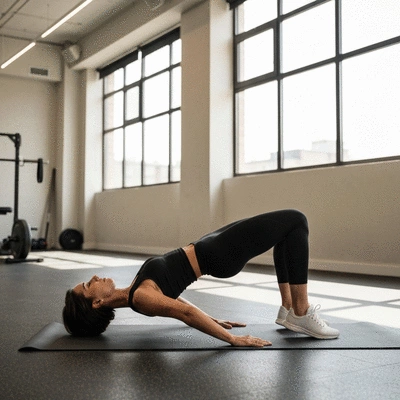
Glute bridges are a straightforward yet effective exercise that primarily targets the gluteus maximus. To perform a glute bridge, you lie on your back with your knees bent and feet flat on the floor. From there, you press through your heels to lift your hips towards the ceiling, squeezing your glutes at the top before lowering back down. It’s a great starting point for beginners who want to engage their glutes without overwhelming themselves!
Begin on your back with knees bent.
Lift hips by pressing through heels.
Hold the top position for added tension.
This exercise not only strengthens your glutes but also helps in improving posture and core stability. It’s perfect for those who may be recovering from injury or just starting their fitness journey. For a deeper scientific understanding of glute activation, you can refer to this study on gluteus maximus activation.
What Are Hip Thrusts?
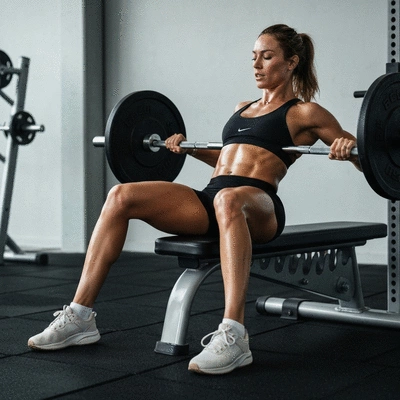
Now, let’s talk about hip thrusts! This exercise is similar to glute bridges but involves using a bench or elevated surface to increase the range of motion. You sit with your upper back against the bench, knees bent, and feet flat on the ground. By driving through your heels, you lift your hips up, which significantly engages the glutes and allows for greater weight loading.
Position your upper back on a bench.
Bend your knees with feet flat on the floor.
Drive through your heels to lift your hips higher.
Hip thrusts are fantastic for those looking to maximize strength and muscle growth. They’re often incorporated into advanced training programs for lifters serious about their glute development! Research, such as this review on glute training, suggests that hip thrusts can be highly effective for hypertrophy.
Importance of Proper Exercise Technique for Glute Activation
Regardless of whether you choose to perform glute bridges or hip thrusts, proper technique is crucial for effective glute activation. Poor form can lead to inadequate muscle engagement or even injury. Here are some key points to remember:
Maintain a neutral spine throughout the movement.
Engage your core to provide stability.
Focus on squeezing your glutes at the top of each lift.
By prioritizing technique, you set yourself up for success and can truly reap the benefits of these exercises. In my experience, taking the time to master these fundamentals will pay off as you progress in your fitness journey! For more detailed guidance on the differences and proper execution, this article from ISSA provides valuable insights.
Pro Tip
To enhance your glute activation during both glute bridges and hip thrusts, try using a resistance band just above your knees. This simple addition will increase tension on the glutes, forcing them to work harder and yielding better results!
Making the Right Choice: Which Exercise Is Best for You?
When considering whether to include glute bridges or hip thrusts in your workout routine, it's essential to think about your fitness goals and experience level. Are you looking to build strength, increase muscle size, or simply improve your form? Knowing your objectives will help guide your choice!
For beginners or those recovering from injuries, starting with glute bridges can be a great way to build a solid foundation. On the other hand, if you’re aiming for maximum strength and hypertrophy, hip thrusts might be the better option. Whatever your goal, I'm here to help you figure it out!
Consider Your Fitness Goals and Experience Level
Each exercise serves different purposes, and understanding your personal fitness journey is key! Here are some considerations:
Beginners: Glute bridges are ideal for those just starting out in their fitness journey.
Intermediate Lifters: If you have some experience, you might benefit from incorporating hip thrusts.
Strength Training: For those focused on increasing strength, hip thrusts allow for heavier loading.
Rehabilitation: Glute bridges can be useful for those recovering from lower body injuries.
By assessing your fitness level and specific goals, you can decide which exercise will work best for you. Keep in mind that it’s totally okay to switch things up as you progress!
Equipment Availability: What Do You Have Access To?
Another important factor to consider is the equipment you have available. Both glute bridges and hip thrusts can be performed with minimal gear, but having the right tools can enhance your workout experience.
Glute Bridges: Can be done anywhere, even on the floor, making them accessible for home workouts.
Hip Thrusts: Typically require a bench and weights, perfect for gym settings.
Resistance Bands and Stability Balls: These can be added to both exercises for increased challenge and variety!
Knowing what equipment you have can help you tailor your workouts to fit your space and lifestyle. At Exercises for Butt, we believe in making fitness accessible for everyone, so don’t hesitate to get creative with your options!
Personal Trainers' Insights on Exercise Variations for Optimal Results
As a certified trainer, I often hear questions about how to adapt exercises for personal needs. It's crucial to listen to your body and modify movements as necessary. Here are some insights:
Form First: Always prioritize proper form to prevent injuries and maximize effectiveness.
Variations Matter: Adding variations, like single-leg glute bridges or barbell hip thrusts, can keep your workouts engaging.
Consult a Trainer: If unsure, working with a trainer can provide personalized insights and adjustments!
Incorporating the right variations not only enhances your training but also keeps things fresh and exciting. I'm always here to help with tailored advice and tips for your glute workouts!
Frequently Asked Questions (FAQs)
Here are some common questions about glute bridges and hip thrusts:
What is the main difference between glute bridges and hip thrusts? Glute bridges are performed on the floor with a lower range of motion, making them ideal for beginners and core stability. Hip thrusts use an elevated surface (like a bench) for a greater range of motion and allow for heavier loading, targeting maximal strength and muscle growth.
Which exercise is better for beginners? Glute bridges are generally better for beginners as they are less complex, require minimal equipment, and help establish proper glute activation without excessive strain.
Can I do hip thrusts at home without a bench? While a bench is ideal, you can improvise by using a sturdy chair, a low coffee table, or even a stack of firm cushions to elevate your upper back, ensuring it's stable and safe.
Do I need weights for these exercises? For glute bridges, you can start without weights and gradually add resistance bands or light dumbbells. For hip thrusts, weights (like a barbell or dumbbells) are often used to achieve progressive overload and maximize muscle growth, though bodyweight hip thrusts are also effective.
How often should I perform glute exercises? The frequency depends on your overall workout routine and recovery. Generally, targeting glutes 2-3 times per week with adequate rest in between sessions is effective.
How can I ensure proper glute activation? Focus on squeezing your glutes at the top of the movement, maintaining a neutral spine, and engaging your core. Using a resistance band above your knees can also help cue glute engagement.
Key Takeaways: Summarizing the Benefits of Each Exercise
Ultimately, the choice between glute bridges and hip thrusts comes down to your personal needs and preferences. Both exercises offer unique benefits that can contribute to your fitness journey.
Glute Bridges: A Safe and Effective Starting Point
Glute bridges are fantastic for beginners and those focusing on form. They help build strength in the glutes and core while being gentle on the body. Plus, you can do them anywhere!
Hip Thrusts: The Power Move for Serious Lifters
If you're ready to push your limits, hip thrusts are the way to go! They activate more muscle fibers, allowing for greater strength and hypertrophy gains. Just be sure to maintain proper form as you increase the weight!
Evaluating Your Body Mechanics for Injury Prevention
Always pay attention to your body mechanics. Proper technique is crucial to avoid injuries. If you're dealing with any discomfort, it’s wise to consult with a professional. Your safety and health are the most important aspects of your fitness journey!
Engage with Us: Personalized Quiz on Your Ideal Exercise
We want to help you find the best exercise that suits your goals! Why not take our personalized quiz? It’s a fun way to discover whether glute bridges, hip thrusts, or a combination of both would work best for you!
Find Out Which Exercise Suits Your Goals
By taking our quiz, you’ll receive tailored recommendations based on your fitness level, goals, and preferences. It’s a quick and easy way to enhance your workout!
Connect with the Community: Share Your Experience
Your fitness journey is unique, and we’d love to hear about it! Share your experiences with glute bridges and hip thrusts in the comments below. Let's motivate each other and celebrate our progress together!
Recap of Key Points
Here is a quick recap of the important points discussed in the article:
Glute bridges are ideal for beginners, focusing on glute engagement and core stability.
Hip thrusts provide a greater range of motion and muscle activation, making them suitable for strength training.
Proper technique is crucial for both exercises to prevent injury and ensure effective glute activation.
Consider your fitness goals: glute bridges for foundational strength and hip thrusts for hypertrophy.
Both exercises can be adapted with variations and equipment to enhance your workout experience.
At Exercises for Butt, our mission is to inspire and empower individuals to elevate their fitness journey through effective glute training. We are committed to providing accessible, safe, and innovative workout strategies that promote strength, confidence, and a positive body image for everyone.



Buying Guide for Glute Fitness Gear
Understanding Glute Activation Science
Glute Training Frequency and Tips
Fix Common Glute Training Mistakes
Selecting Glute Activation Exercises Wisely